Have you ever walked into a drug store and been overwhelmed by the sheer number of reading glasses available? I certainly have! It always struck me as odd – why so many? My own journey with vision correction led me down a path of discovery, and I'm excited to share what I've learned about reading glasses and why they're so prevalent.
I remember a time when I was nearsighted and couldn't afford prescription glasses. I tried wearing those cheap readers over my regular glasses when working on the computer. It wasn't ideal, to say the least. Everything felt a bit off, and my eyes were constantly strained. I knew there had to be a better solution, which led me to explore the world of over-the-counter reading glasses more deeply. I needed to understand why they were so readily available and if they could actually help me.
Through research and a lot of trial and error, I learned some key terms that are essential for understanding vision correction. It turns out that there are a few common conditions that reading glasses can address. These include:
Knowing these terms helped me understand why drug stores carry so many reading glasses. Most of them are designed to address presbyopia, which is a very common condition as we age.
I realized that the reading glasses in drug stores are primarily aimed at people experiencing presbyopia. These are individuals who generally had good vision but, due to age, are now finding it difficult to focus on close-up tasks like reading. These glasses help compensate for the lens's decreased ability to focus. I learned that while I was trying to use them incorrectly (over my existing prescription for nearsightedness), they are a great option for people who need a little help with close-up vision due to age-related changes.
One key difference I discovered is that correcting long-distance vision accurately is more challenging than providing "good enough" short-distance vision correction. When driving, for example, you need precise vision. However, for reading, a slight imperfection in the lens strength is often less noticeable. This makes over-the-counter readers a practical option for many people. It’s much easier to get a “good enough” short distance vision correction.
I also wondered why there were so many different strengths of reading glasses. I discovered that the degree of presbyopia varies from person to person. As we age, our eyes' ability to focus weakens at different rates. This is why you see strengths ranging from +1.00 to +3.00 or even higher. It's all about finding the right magnification to compensate for the loss of focusing power. The best way to determine the correct strength is to visit an eye doctor, but many people find that they can get by with over-the-counter options.
Moreover, I learned that accurately correcting distance vision is more complex than correcting near vision. Distance vision correction requires precision because activities like driving demand clear, sharp vision at a distance. Slight inaccuracies can significantly impact safety and clarity. Near vision, on the other hand, is more forgiving. A minor difference in lens strength is less likely to cause significant problems for reading or other close-up tasks.
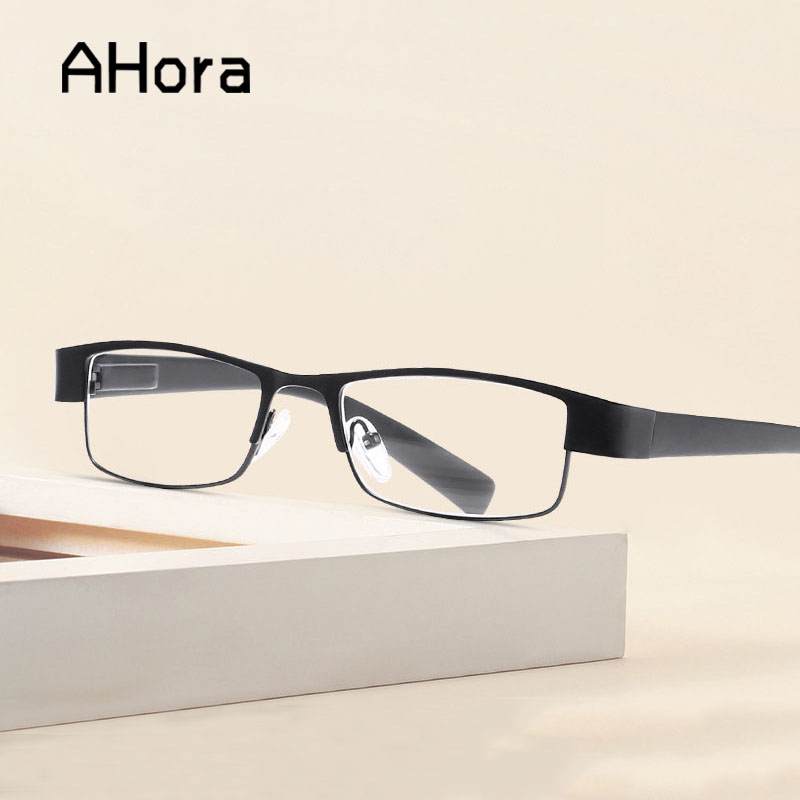
After realizing that my initial approach of wearing readers over my nearsighted glasses was not ideal, I started looking for dedicated reading glasses. I stumbled upon the Ahora Square Metal Men Reading Glasses from homepage. I was looking for something stylish and comfortable, and these seemed to fit the bill. The first thing I noticed was the lightweight design, which made them comfortable to wear for extended periods. They are available on Mozaer's website.