It happened to me, and it probably will to you too. One day, I realized I was holding my phone further and further away to read text messages. Then came the menus in dimly lit restaurants... a blurry mess. It's a frustrating experience, but knowing you're not alone and having a plan can make it much easier. Let me share my journey into the world of reading glasses, what I learned, and some tips that might help you too.
I remember the exact moment I suspected something was up with my vision. I was giving someone a haircut. I always took pride in making sure the necklines were perfect. You know, nice and clean. But suddenly, I couldn't see the details like I used to. The lighting seemed off, my perspective felt wrong, and no matter how hard I tried to focus around the ears, it was all just a blur. That's when I knew I needed some help with my near vision. It was time to consider homepage.
Like many others, I resisted the idea of needing reading glasses. I thought it meant I was getting old! But the truth is, it's a very common condition called presbyopia, and it happens to almost everyone as they age. The lens in your eye becomes less flexible, making it harder to focus on close-up objects. It's a natural part of the aging process.
For me, the blurry vision became noticeable around age 43. I was in denial for a while, squinting and straining my eyes. But I eventually realized that I needed a solution. I went to an optometrist, and they confirmed that I needed reading glasses. It was a bit of a shock, but also a relief. Finally, I could see clearly again!
I know someone who held out a little longer and started wearing readers around 48, but only bought them at 49. Another person noticed the need around 42. It just goes to show that everyone's experience is different, but it's best to address the issue sooner rather than later.
One friend of mine, around 45, went from thinking he didn't need vision coverage to rushing to the optometrist as soon as his new insurance kicked in. That really hit home how quickly things can change!
Initially, I started with simple over-the-counter reading glasses. They helped for reading books and documents, but I still needed my regular vision for computer work and distance viewing. This meant constantly switching glasses, which was a real hassle. I quickly realized I needed something more versatile.
I started wearing readers at 43. By 44, I moved on to multi-focal contact lenses. However, recently at 45, I decided to get my first pair of bifocal glasses. It took a little getting used to, but now I can seamlessly switch between reading and distance vision without constantly swapping glasses.
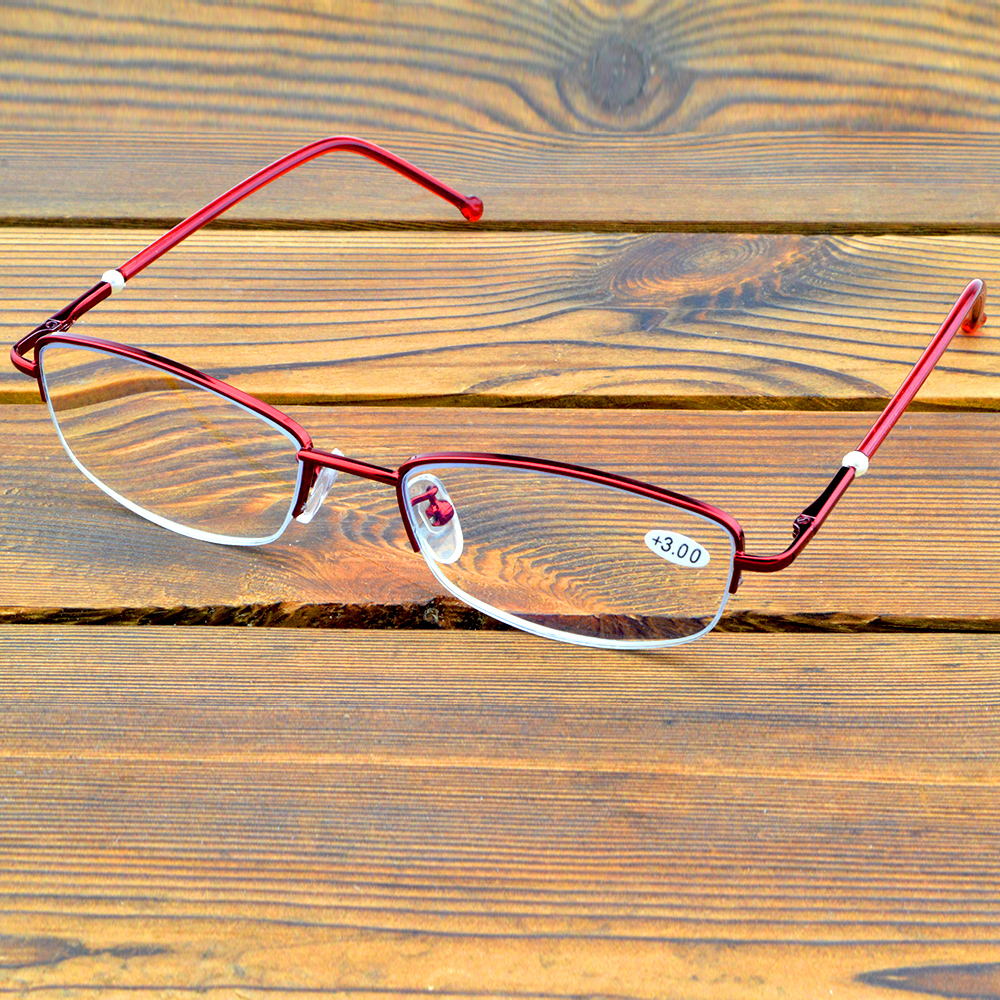
Then, I discovered progressive multi-focus reading glasses. These glasses have a gradual transition between different lens powers, allowing you to see clearly at any distance. I found a great pair at Mozaer: the Half-rim Red Color Frame Rectangle Spectacles. They're stylish, comfortable, and really help with both near and far vision.
I tried the Half-rim Red Color Frame Rectangle Spectacles with coating lenses. The progressive multi-focus feature really works. I can see things up close and further away without having to change my glasses all the time. The red frame is also quite stylish and I've gotten a few compliments. It's a subtle way to add some personality. They're comfortable to wear for extended periods, which is important since I spend a lot of time reading and working on the computer. The coating on the lenses also helps reduce glare, making them easier on my eyes.
Getting used to reading glasses takes time and patience. Here are some tips that helped me: