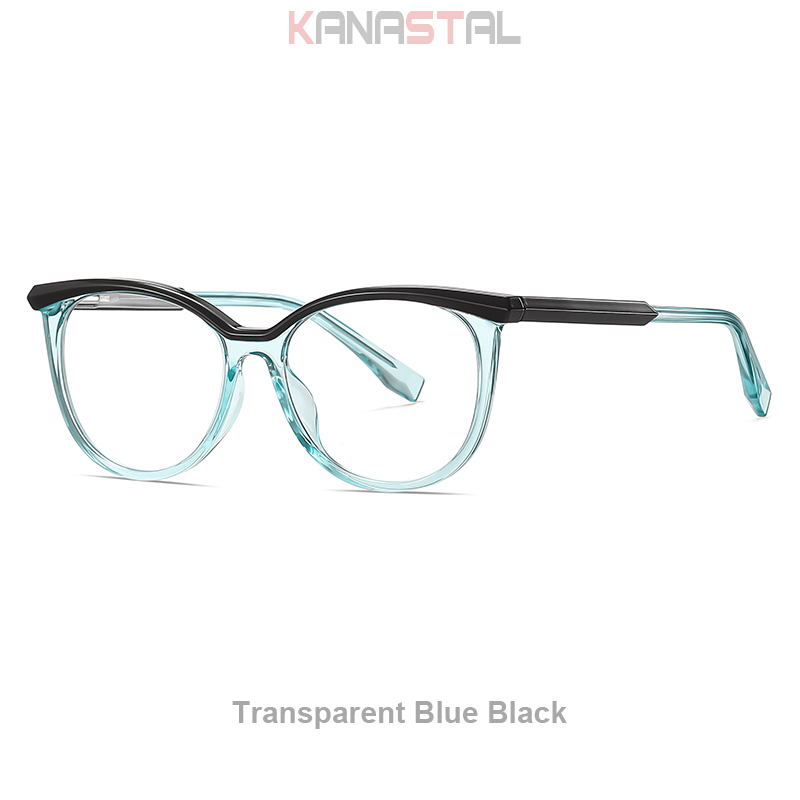
Last Tuesday, I met my friend Jane at our favorite cozy cafe. As I slid into the booth, the server handed me a laminated menu. I pulled out my new glasses and immediately began tilting my head—up and down, side to side—like a bird searching for a worm. Jane finally leaned over the table, laughing. "What's going on with you?" she asked. "Are those new? You can't even read the menu!"
I let out a defeated sigh. Those glasses were supposed to solve all my blurry problems. I had found them online—trendy, round frames with blue-light blocking features. They looked fantastic, but the lenses were a complete letdown. I had tried to buy reading glasses the easy way, only to learn that there's nothing easy about it when quality control is nowhere to be found.
The entire experience had been a nightmare. The first pair arrived with blurry lenses, and I knew right away the prescription was off. Instead of a refund, the company offered me 110% store credit. It sounded like a good deal, but it turned out to be a clever trap.
I used the credit to order a second pair, which were still blurry. Because I had paid with store credit, they refused to give me my money back, stating that credit purchases were non-refundable. I was stuck. I tried a third pair, with the same disappointing result. Before I knew it, I was hundreds of dollars into glasses I couldn't even wear.
It became clear their lenses were simply poor quality. This was especially true for my progressive lenses, which are meant to handle distance, mid-range, and close-up vision. Cheap progressives offer only a tiny, narrow zone of clarity, forcing you to constantly jerk your head around just to read a single sentence. The result was constant neck pain and headaches.
I finally gave up on returns. I took the frames to a local optician, who examined the online lenses and told me the prescription wasn't even close to correct. I ended up spending another $200 to have proper, high-quality lenses fitted into the frames I already owned. So much for saving money!
That painful experience taught me a valuable lesson: chasing deep discounts often means paying twice in the end. I decided to only trust brands that prioritize optical quality and materials. I started looking for frames featuring CR39 lenses, known for their clarity and durability, and avoided large online retailers with confusing return policies.
This shift in focus led me to a dedicated provider of high-quality lenses. Ready to invest in a pair that actually worked, I sought out reviews emphasizing lens clarity and customer service guarantees, not just stylish frames. This search is how I discovered the quality-driven approach of the Mozaer Brand.
Action Step: If you're buying progressive lenses, be sure to ask about the width of the viewing corridor. A narrow corridor means you'll be constantly moving your head to see clearly.
The difference was night and day. When my new, custom-made glasses with high-quality optics arrived, I put them on and the world instantly snapped into focus. No more tilting or searching for a sweet spot—everything was clear from corner to corner.
I realized the struggle I'd had with the cheap lenses wasn't normal. It wasn't me failing to adapt to progressives; it was the lenses themselves being poorly crafted. My new lenses provided a wide, comfortable field of vision. I could finally sit at my computer and see the entire screen without constantly bobbing my head up and down.
If you're looking to buy reading glasses, especially with a complex prescription, invest in lens quality from the start. It will save you frustration, time, and money in the long run.
My old, blurry glasses failed the kitchen counter test every single time. I often follow a recipe on my tablet while chopping vegetables—a classic mid-range distance. With the cheap glasses, I'd look down at the cutting board (close vision) and then up at the tablet (mid vision). Every glance upward left the recipe slightly blurred, forcing me to lean in or tilt back. It was utterly exhausting.