I've always been fascinated by technology, especially the kind that promises to make our lives easier and more immersive. Remember when 3D TVs were all the rage? I was so excited about the prospect of watching movies in my living room with that extra dimension. But then… the glasses. They were clunky, uncomfortable, and honestly, a bit of a hassle. That got me thinking: what happened to the idea of 3D without the glasses? Why isn't it everywhere?
I dove into researching why glasses-free 3D hasn't become mainstream. I remembered seeing demos years ago of technology that used head tracking and screens that could focus light in 3D space. It seemed so promising! But when I tried to find these technologies available for home use, I hit a wall. It turns out, the simplest explanation is often the truest: not enough people were willing to pay the extra cost for the technology. Demand wasn't high enough to justify the investment, which is understandable from a business perspective.
I also learned about the challenges of creating a convincing 3D effect without glasses. One method, like the one used in the Nintendo 3DS, relies on projecting a separate image for each eye. The problem is, this only works if you're looking at the screen from a very specific angle and distance. It works okay on a small handheld device because you can easily adjust your position. But on a larger TV screen, it becomes much more difficult to maintain the correct viewing angle for everyone in the room. This is a significant limitation.
I remember the 3D fad. It felt like everyone was trying to cash in, but the economics just didn't add up. Producing 3D content was more expensive, but people didn't want to pay significantly more for the experience. Why would studios invest more in creating 3D movies if they couldn't recoup the costs? It makes sense that the momentum slowed down.
Interestingly, I recently came across news that Samsung is releasing a glasses-free 3D monitor. It seems like the technology is being revisited! Whether it will catch on this time remains to be seen, especially considering the lack of 3D content being produced these days. It’s a gamble, but I’m curious to see how it plays out.
I also stumbled upon a company called Looking Glass that makes no-glasses 3D monitors. From what I’ve seen online, it looks like you're peering into a box containing 3D objects. The videos of their displays at trade shows are impressive. However, these monitors are incredibly expensive, which likely explains why they’re not more common.
While exploring the world of 3D technology, I realized I needed to address my own vision needs. I've been noticing that my reading vision isn't what it used to be. Switching between reading and looking at things far away has become a struggle. I was tired of constantly swapping between reading glasses and regular glasses. That's when I started looking into progressive lenses.
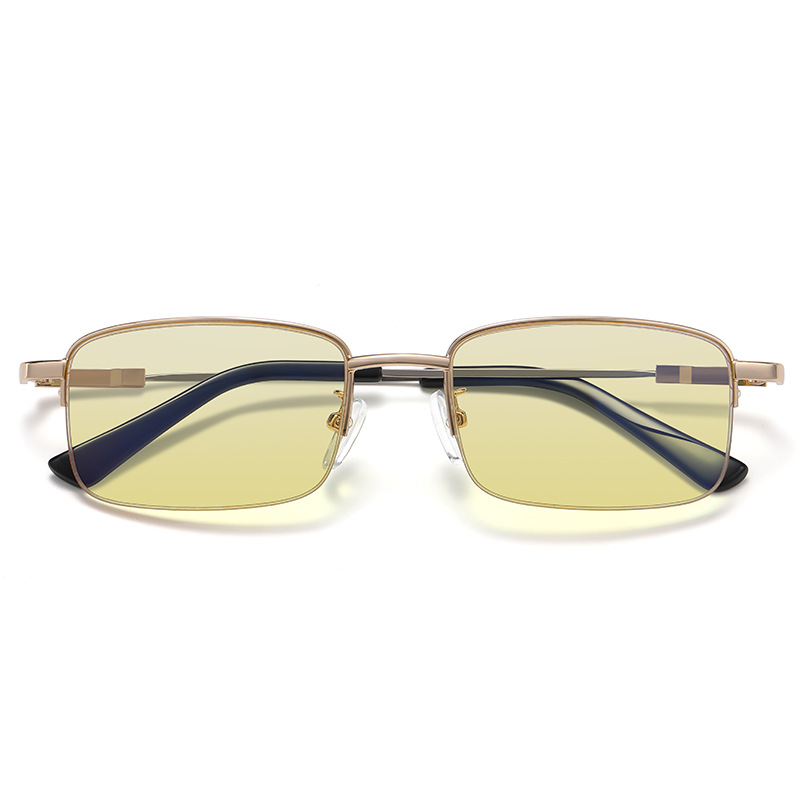
I decided to try the Clear Lens Anti-blue Progressive Multifocal Reading Glasses. I was initially hesitant about ordering glasses online, but the reviews were positive, and I was intrigued by the "smart zoom" feature. I needed something portable and stylish, especially as I'm getting older. I opted for the gold frame with a +150 correction.
I have to say, I've been pleasantly surprised! The transition between different focal lengths is much smoother than I expected. I can easily read a book, then look up and see the TV clearly without having to switch glasses. The anti-blue light filter is also a nice bonus, especially since I spend so much time in front of screens. The frames are lightweight and comfortable, and I think they look pretty good too. It's not a perfect solution; there's still a slight adjustment period as your eyes get used to the lenses. But overall, these progressive lenses have made a significant difference in my daily life.
I found some stylish frames at Mozaer Frames that really caught my eye. Having a good-looking pair of glasses is important to me, especially as someone who needs to wear them daily. The selection process was very easy and the anti-blue light feature has significantly helped me focus better.
Here’s a breakdown of my experience with progressive lenses:
If you're considering progressive lenses, here are a few tips based on my experience: